
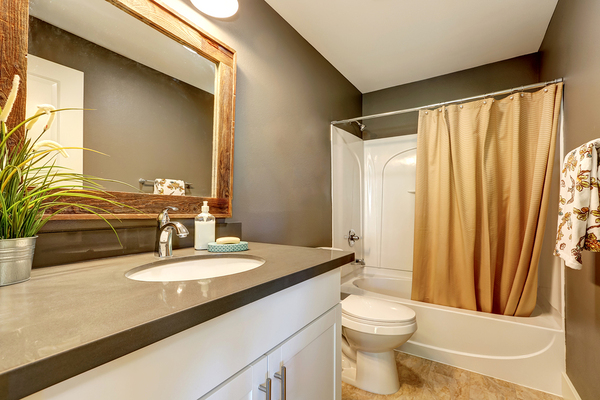
There’s a lot going on in the typical residential bathroom, especially considering its size compared to the rest of the home. From electrical and plumbing to ventilation and water heaters, bathrooms are packed with systems that affect safety, health, quality of life and the value of the house.
Home inspection training and on-the-job experience prepare you for all of it. But a few extra tips can’t hurt.
Here are 6 things to watch out for when inspecting the busiest room in the house:
#1: Moisture Around the Toilet
There’s hardly a toilet that hasn’t overflowed at least once. But chronic dampness around the toilet indicates a leak, not a mishap. Left unchecked, a leaky toilet can rot the subfloor.
What to look for:
- Rusted tank bolts
- Water collected on the underside of the tank
- Water around the toilet base
- Wobbly toilet installation
- Loose floor bolts
- Loose water supply fitting under the tank
- Leaky water supply shutoff
_600x.jpg)
If this was a long-term leak, the cabinet floor would probably be warped.
#2: Inadequate Water Supply Shutoffs
Most, but not all, homes have at least one water supply shutoff in the bathroom. But it’s usually at the toilet. Sinks, tubs, and showers might have no visible shutoff, which makes emergency water control and repairs much more difficult.
What to look for:
- Missing shutoffs at any or all fixtures
- No wall or floor panel which could give access to hidden shutoffs
- No shutoffs visible directly under the bathroom, such as in a basement or crawlspace
Some plumbing access panels are located on the opposite side of the wall in another room.
#3: Soft Floors Anywhere in the Room
Soft floors are never a good sign. In a bathroom, the often indicate structural rot from a long-term water leak. Because bathroom flooring is usually water-resistant, moisture can collect underneath with no pooling on top.
What to look for:
- Cracked or loose floor tiles
- Warped laminate or wood flooring
- Dark stains
- Areas where the floor feels bouncy underfoot
- Mold and mildew around the baseboards
- Moisture and rust around the water heater
#4: No Window or Ventilation Fan
All bathrooms need a source of ventilation. Some homes have a window, some have a vent fan, and many have both. But you might find a home that has neither, which allows condensation to build up.
What to look for:
- Broken or missing ceiling ventilation fan (often, but not always, paired with a light)
- No window or a window that’s permanently sealed or closed
- Excessive condensation around windows, on walls and ceilings
- Wall streaks that could indicate old condensation issues

Further inspection can reveal whether mildew is caused by bad housekeeping or moisture inside the walls.
#5: Excessive Mildew Around the Tub
Bathrooms provide the perfect environment for mildew to thrive. Most bathrooms have a touch of it once in a while. But excessive mildew points to either bad housekeeping or a more serious problem. Plumbing leaks, poor ventilation, improper bath and tub installation, and even poor insulation on an exterior wall can result in chronic mildew.
What to look for:
- Soft wall tiles which could indicate an improper moisture barrier, water infiltration and rot
- Dampness around the tub base from a leak
- Excessively cold walls (in cold weather), pointing to poor insulation and creating condensation
- Water stains on the structure under the floor (if accessible)
#6: No GFCI Protection
Electrical wiring in wet areas needs ground fault circuit interruptor or GFCI protection. Usually, GFCI protection comes in the form of a special outlet with a button to test the receptacle or reset it if it trips. Without protection at either the outlets or at the main breaker panel, electricity in wet areas is hazardous.
What to look for:
- No GFCI electric receptacles
- No GFCI breaker at the load center or breaker box (if either is present, the room has protection)
Water is the primary troublemaker in bathrooms. It can ruin floors, weaken structural elements, rust metal fixtures and make electricity a shocking experience. It can also introduce air quality issues such as mold and mildew.
You’ll inspect a lot of bathrooms in your time as a certified home inspector. You’ll develop your own system and learn the signs of trouble up ahead. And with a great home inspection reporting app, you won’t miss a thing.
If you’re in the market for a better home inspection checklist and a simpler way to build a report, you want the Report Form Pro app. It’s sleek, straightforward and creates a professional looking report that you can customize.
Download it for Android, get it on Google Play, or find it at the Apple App Store.